What Is Staylistening? Why It Works and How to Practise It
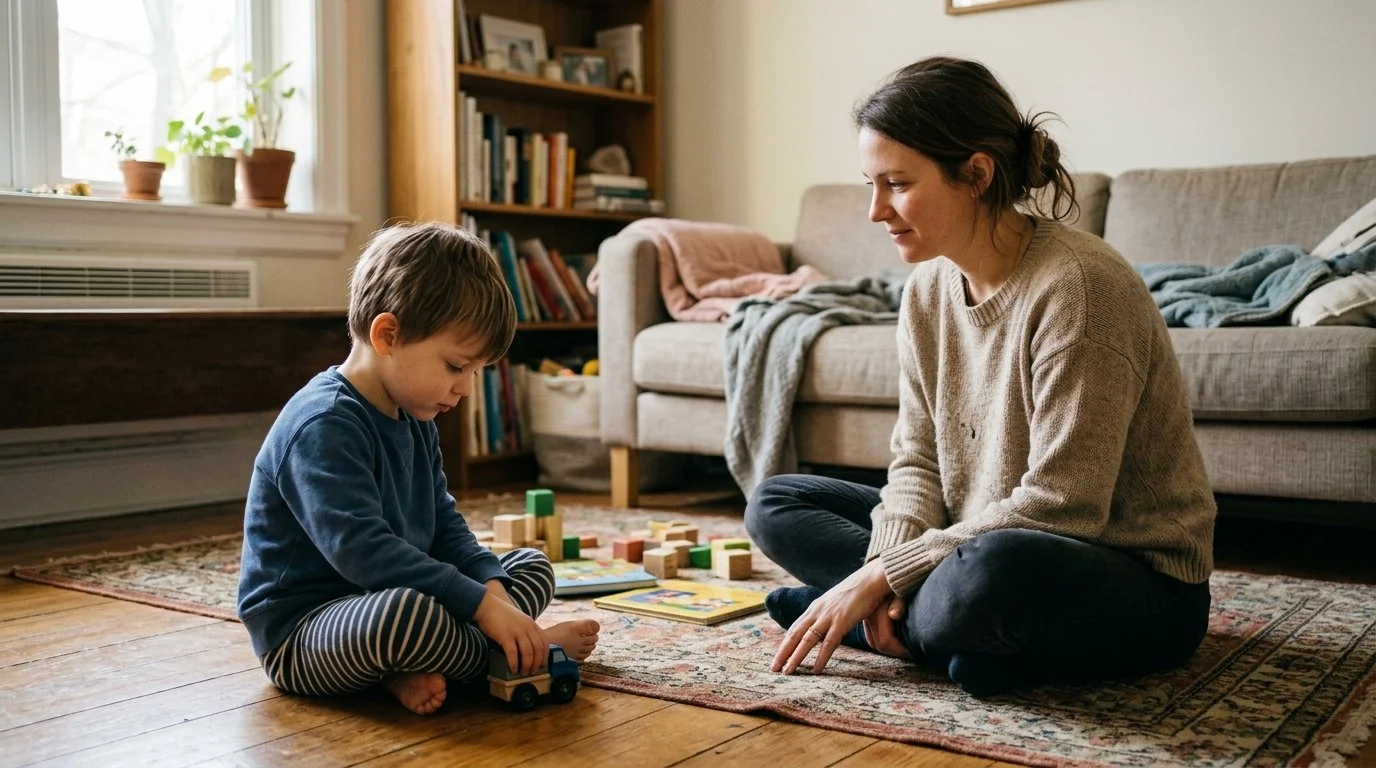
Parent sitting calmly beside an upset child, demonstrating Staylistening through quiet presence and connection.
If you've spent any time around Hand in Hand Parenting (or around me), you've probably heard the word Staylistening.
For many of us, Staylistening asks something that goes against most of our instincts, most of our conditioning, and most of what we were shown growing up.
So let me break it down properly.
What is Staylistening?
Staylistening is one of Hand in Hand's five Listening Tools, and it's exactly what it sounds like: staying, and listening, while a child moves through a big feeling.
Not fixing it. Not redirecting it. Not rushing it toward a resolution. Just staying close with warmth and attention while the feeling does what feelings are designed to do: move through.
It can look like staying close, warm and present near a child who is crying and saying very little. It can look like staying steady and connected during a full meltdown without trying to stop it. It can look like being with a child who is raging or trembling or stuck in a loop of whining or repetitive behaviour, and not adding more heat to an already hot moment.
What you might say, if you say anything at all (and less is definitely more when it comes to actual words): "I'm right here." "I hear you." "It's okay to feel this." "I've got you." Words that convey presence and warmth, not solutions. Nothing that tries to talk them out of what they're feeling, fix the problem, or move things along faster than they're ready to go. Generally, empathetic sounds and body language are far safer and more effective than words.

Why does Staylistening work?
Here's the thing most of us weren't taught: feelings are not problems to be solved. They are the nervous system doing its job.
When a child is in the grip of a big feeling, the part of the brain responsible for logic, language, reasoning, and problem-solving is genuinely less accessible. This isn't defiance or manipulation; it's neuroscience. Trying to reason with a child in that state, or offer solutions, or teach a lesson, is a little like trying to have a calm conversation with someone while they're on a rollercoaster. The conditions aren't right. The information won't land.
What does reach a child in that state is felt safety. A regulated, warm, present adult nearby. Not fixing... just being.
And when feelings are met that way; when they're allowed to exist, witnessed with warmth, and not hurried, they move through. The crying settles. The raging quietens. The child comes back lighter, clearer, more connected. Not because you did something clever, but because you stayed.
Over time, children who are regularly Staylistened to build something really important: the felt knowledge that emotions are survivable. That feelings move through rather than staying forever. That the relationship holds even when things get hard. This is the foundation of genuine emotional regulation; not a technique they've learned, but a trust they've built through experience.
It's also worth knowing that the tension a child is offloading in a Staylistening moment isn't always about what's happening right now. It may have been building for hours, days, or much longer. We don't need to know the source to help. We just need to be able to stay.
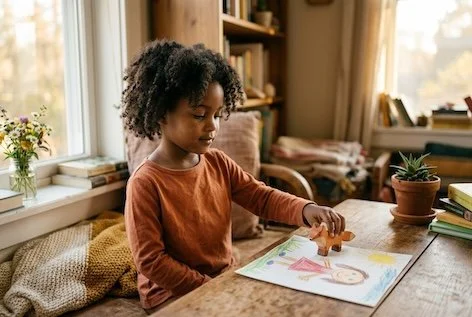
It actually makes things easier... not harder
I know that staying present through a big feeling sounds demanding. And it can be. But here's what it takes off your plate: you don't have to have the answers. You don't have to know how to fix it. You don't have to say the right thing or find the perfect response.
You just have to be there.
That's it. The feeling will do the rest.
For those of us who grew up feeling responsible for managing other people's emotions, or who learned that feelings needed to be solved quickly, or felt pressure to stay positive (hear my experience here), this can be quietly revolutionary. You're allowed to not know what to say. You're allowed to sit in the discomfort of witnessing something hard without rushing toward resolution. In fact, that willingness to sit in it is precisely what helps.
How do you actually practise Staylistening?
Here's what Staylistening can look like in practice:
Come in close. Get to their level if you can, sitting beside them, on the floor with them, whatever brings you into their physical space. If your child is someone for whom physical closeness feels like too much when they're activated (some children, particularly those who are neurodivergent, may find this overwhelming), read their cues and adjust. Being nearby without being right on top of them can be just as containing.
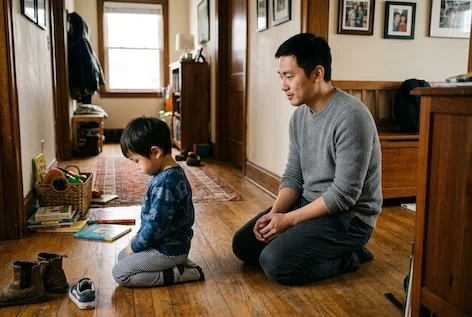
Stay warm. Your body language, your tone, your face; these are communicating safety even when you're not speaking. A soft face and an unhurried body say: there is no emergency here. You are safe. I am not going anywhere.
Say very little. This is where most of us have to override our instincts. The urge to explain, to reason, to reassure, to solve... it's strong. Resist it. A few warm words are enough: "I'm here." "I hear you." "That sounds really hard." And then quiet. Let there be silence. Let the feeling have space.
Make eye contact only if it's comfortable. For some children (and some adults) sustained eye contact during a heightened moment can feel like pressure rather than connection. It is absolutely fine to be present and warm without locking eyes. Follow their lead.
Don't try to end it. This is the hardest part. We want the crying to stop, the rage to pass, the distress to be over. But trying to hurry a feeling along (with distraction, with bribery, with "okay, that's enough now") tends to push it underground rather than through. The goal is completion, not cessation. A feeling that's been fully felt and witnessed tends to resolve more cleanly, and more quickly in the long run, than one that's been cut short.
Hold the thought that they are good. Whatever is happening on the surface, beneath it is a child who is having a hard time; not a bad child, not a broken child, not a child who is doing this to you. That internal framing matters. Children can feel it when we're with them versus managing them.
What about afterwards?
Once the feeling has moved through and your child has come back to themselves (and they will), that's when connection, conversation, or gentle problem-solving becomes possible. Not before. But after a good Staylistening, you'll often find they need very little. They come back lighter. Sometimes they're ready to play. Sometimes they want a hug. Sometimes they just quietly get on with things, as if a pressure valve has been released. Which, in a very real sense, it has.
The urge to teach may be still burning inside you, but it's very rarely necessary. Your child knows right from wrong and your family values; they just couldn't access that wisdom in that moment. Trying to instill the lesson too soon after the offload might set you back.
One last thing
Staylistening asks a lot of us, especially if we weren't raised this way ourselves. Staying present through another person's distress without fixing it can bring up our own stuff; our discomfort with strong emotions, our fear that we're doing it wrong, our own unmet need to be heard.

This is why Hand in Hand's Tool of Listening Partnerships exists, so that we as adults have somewhere to put what we're carrying. The steadier we are, the more we can offer. And getting there doesn't require perfection. It just requires that we keep coming back.
You can read more about Listening Partnerships here.
And if you want to practise Staylistening with real support around you, the Hand in Hand Community is free to join.