What Is Collective Trauma Doing to Our Young People? (And What Can We Do?)
A note before we begin: a version of this piece also appears as a Hand in Hand Parenting newsletter, where I write regularly. I wanted to expand upon it and share my thoughts with a bit more detail.
Something is happening in my local area, and I suspect it's not unique to my setting at all.
The kids are not okay.
There's what seems to be an outbreak of what's being labelled as "anti-social behaviour." It's mostly being shared online in local community groups. Some of the discussions that stem from these posts are confusing, scary, offensive, hurtful, judgemental, and deeply concerning.
When I see these issues and the discourse around them, my instinct is: the kids are not okay.
And I have some theories about why.
What is collective trauma, and are our young people living it?
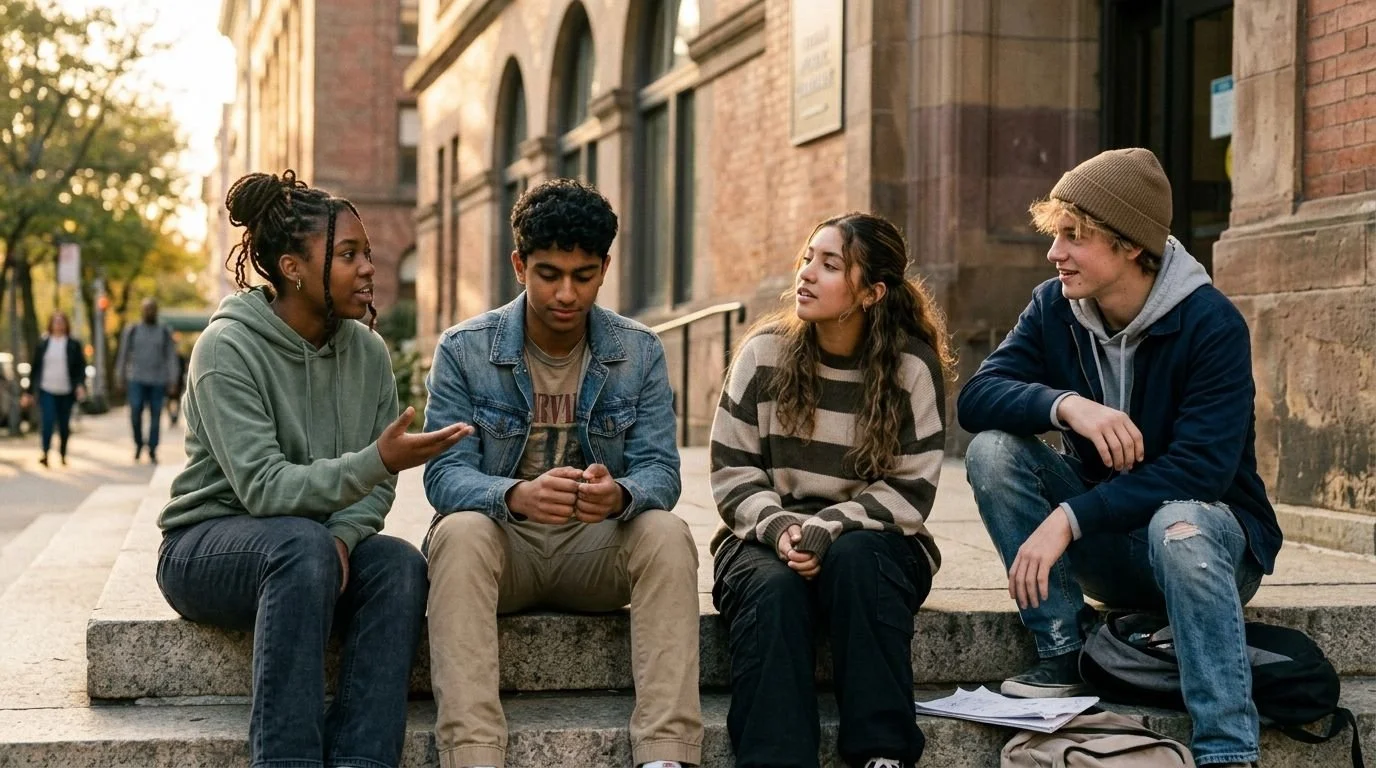
This generation of young people are in a constant state of alert. They experienced the fear, uncertainty, imminent danger, loss and catastrophe of the pandemic. They were isolated for months on end. They had to change how they learned and how they related to one another. Things were never quite the same again.
Now they have the news of the world at their fingertips... and it's sad, brutal, disillusioning, terrifying, shockingly graphic, and delivered with far less sensitivity than any developing psyche should have to navigate. Just as they pause and sit with something awful, the algorithm reads that pause as a request: more of this, please. And in it comes, flooding their feeds and their nervous systems.
It's a dark, bleak snowball. Always gathering.
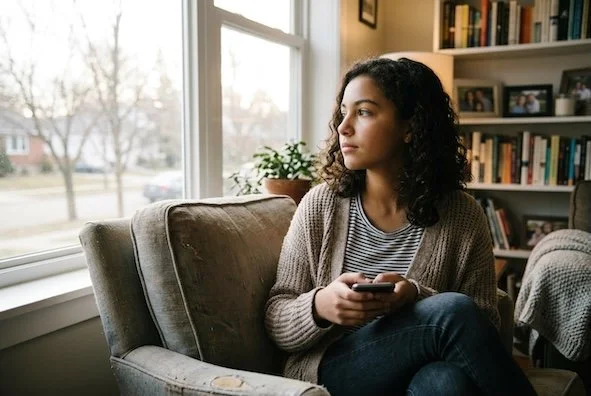
So what does a person do when the world feels loud and hopeless and they feel small and helpless?
They shut down.
They see the next painful thing and tell themselves: I don't care. Because caring for a second too long is what flooded the feed. So they switch off. They tell themselves it doesn't matter. Who cares about the future?
It might not even exist.
I can't think about that because it's too raw and too real and I can't deal.
Disconnection and turning down empathy is a defense mechanism. And I don't blame these young people for not knowing what else to do.
But when you turn the dial down on empathy and connection, you can find yourself less able to advocate for yourself and your own values. You can get swept up in thrill-seeking and following the crowd without really choosing to.
I think this is what's happening to a small section of our youth, and I want to be clear that it is only a small section. These are the young people we're hearing about because of our own immediacy and access to information, and because negative stories get a bigger platform. There are still a multitude of wonderful young people doing good in this world and working to make it better. And then there are these groups who are suffering and making poor decisions. I don't condone those decisions. I don't think they're okay. But I do have compassion for the people making them.
I don't blame the parents either. That's where a lot of these conversations tend to land. There's a lot of "it comes down to bad parenting." I don't think it's ever that simple. And I take real issue with the rhetoric that what these kids need is a good kick up the backside. Children who are still on the receiving end of that approach are far more likely to be off-track than those who are met with curiosity, connection, and warm, loving limits.
So what can we actually do?
Disrupt the narrative.
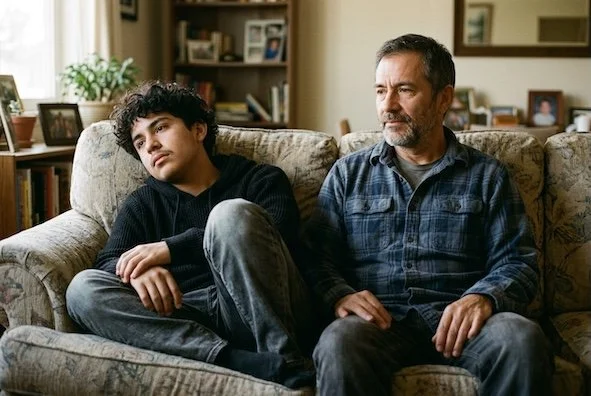
I had one of these conversations recently and someone presented the idea that this is a generation of children whose parents never gave any boundaries. I gently challenged that, pointing out that this is just a variation of the "cause of child disruption" story that gets recycled by every generation, and that in my experience I haven't witnessed permissive parenting en masse. I offered instead the collective trauma framing above. Everyone in the group began to slowly, sadly nod. The person who had originally raised the issue became emotional and said: "Gosh, that is a lot harder to think about." And it is. It's a heartbreaking reality. But it's a more truthful and more useful one.
Model and nurture empathy and kindness in your home.
You're probably already doing this, but things like repairing after rupture and modelling accountability are the best ways to teach your children the same skills. You can also be intentional about naming kindness and empathy when you see it. "Hey, I noticed how patient you were with your sister before... I think that really helped her." Pointing it out helps children see themselves as people who have those qualities.
Counterbalance the terror onslaught.
Consume more good than bad, particularly as a family. Find the books, shows, films, clips, and accounts that bring hope and reflect your values. Be deliberate about it.
Hear them out.
While all of the above are good general practices, don't reach for them in the moment when the young person is in the depths of it. If they're feeling hopeless or helpless, don't tell them they're overreacting or that everything will be okay. This is where the Hand in Hand Tool of Staylistening comes in. Just let them offload and say very little, maybe "I hear you. That's really scary." Let them be heard and held while the tension moves through. This is not the moment to force positivity. By allowing and validating those feelings, you do more to help them move forward than any amount of reassurance.
Volunteer.
You can't disrupt the narrative better than really getting close to young people and hearing and witnessing firsthand what they are struggling with. I volunteer with Raise Foundation, a one-on-one mentoring program operating in high schools Australia-wide. I am in my ninth year of mentoring at a local high school.
If mentoring speaks to you, Raise is a wonderful place to start. There are also organisations like Youth Off The Streets, Beaches Youth Hub, and many local council programs that may speak more to your interests and skillset. Whatever form it takes, an hour a week, a term, a year, showing up for a young person who isn't yours is one of the most powerful things an adult can do right now.
Get yourself listened to.
The Hand in Hand Tool of Listening Partnerships is next-level self-care. You and another adult exchange unfiltered time: to listen and be listened to, without interruption, without judgement, without comparison. Just pure trust in each other's goodness and wisdom. This is where you can put down your biggest fears about your children and the world, and feel lighter for having done it.
Why Listening Partnerships matter right now.
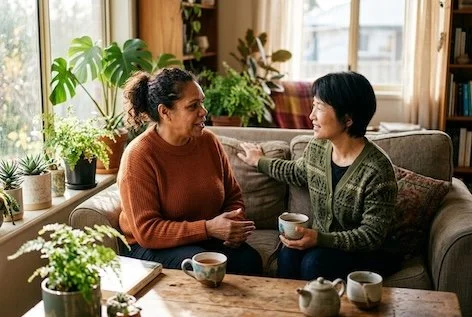
Listening Partnerships really are the best place to process all of this, because you can't show up as a steady presence for any of the above if you're terrified too. And if you are, you are absolutely not alone. It's a genuinely hard moment in history. I feel those twists and fears and moments of powerlessness myself. When I vouch for this approach, it's because I have fully leaned into it. The good news is that it's now much easier to find a Listening Partner, because Hand in Hand has made their online community completely free. You can join here.
You and your children are doing the best you can. If it feels hard, that's because it absolutely is.
The young people in your life are lucky to have someone who's still asking these questions and willing to really think about the solutions.